


Since the pandemic, most project collaboration among contractors, the design team, and stakeholders now happens remotely.
As a result, many contractors are coordinating with distributed teams, and if you do not have in-house BIM capabilities, that often includes working with an outsourced BIM service provider.
After working on thousands of projects, I’ve found that standardizing how you collaborate with VDC teams directly impacts BIM coordination and rework.
Why Alignment Matters in VDC Collaboration
When you start working with a new BIM company, you should expect a learning curve during the first few projects.
The learning curve is not technical. It is about learning how to work together.
That process includes how information is shared and which communication channels are used. But more importantly, it involves alignment with constructability preferences.
Two contractors can approach the same problem in completely different ways. Your BIM partner needs to understand your approach and apply it consistently throughout the BIM coordination process.
What Effective VDC Collaboration Looks Like in Practice
When collaborating with a VDC team, you can improve coordination outcomes and reduce rework by following these best practices
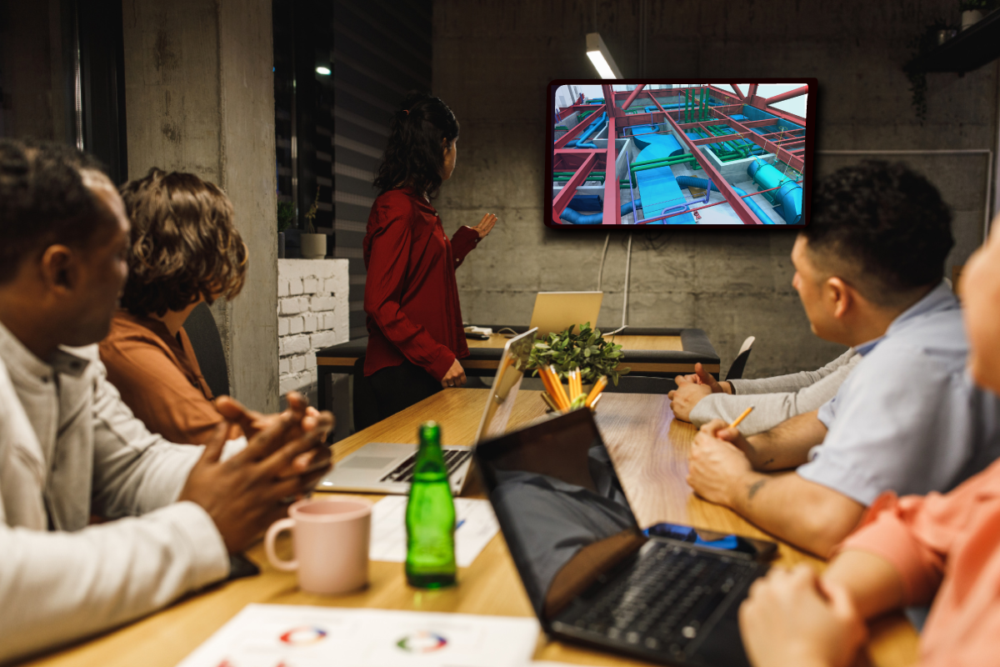
Attend BIM Coordination Meetings
You need to attend BIM coordination meetings with your VDC team.
Do not position yourself as the middleman without them in the room. At the same time, do not leave the VDC team to represent you on their own.
BIM coordination works best when the contractor stays directly involved and takes ownership of the model.
Set a Weekly BIM Review with Your VDC Team
In addition to BIM coordination meetings, I recommend setting up a weekly meeting between your team and the VDC team.
Use this time to review layouts, validate clash resolutions, and confirm the model reflects your approach.
Your foreman should be part of this process. Their input helps ensure coordination decisions are practical and buildable in the field.
These meetings often lead to RFIs, updated orders, or decisions that require communication with the client.
Provide Submittals Before Modeling Starts
Accurate submittals are critical for the VDC team to model correctly.
If submittals are delayed, the model is based on assumptions, and that usually leads to rework.
Providing submittals early allows the BIM coordination process to move forward with fewer revisions.
Communicate Your Routing Preferences
Every contractor has a different approach to routing systems.
Your VDC team needs to understand how you solve constructability challenges and how you want systems laid out in the 3D model.
Clear direction upfront leads to fewer corrections later in the coordination process.
Use Redlines to Guide the VDC Team
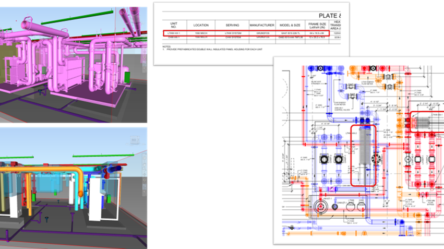
Redlines are one of the most effective ways to communicate changes.
The simplest method is marking up PDFs using tools like Bluebeam. You can also mark up drawings by hand, take a photo, and share it with the team.
Clear redlines reduce back-and-forth and help the VDC team make accurate updates more quickly.
Final Takeaway
A VDC team performs best when it is treated as part of the project, not just a modeling resource.
From my experience, the most effective BIM coordination happens when contractors stay involved, provide clear direction, and take ownership of the model throughout the process.