

BIM Coordination is often treated as an open-ended process, but for project teams, uncertainty around duration creates real risk. Coordination directly impacts schedule reliability, trade stacking, and field productivity.
So the question is: How many BIM coordination meetings does it take to fully coordinate a building?
While there’s no universal answer, experienced VDC teams can estimate coordination duration using a simple, data-backed rule of thumb.

What Is BIM Coordination?
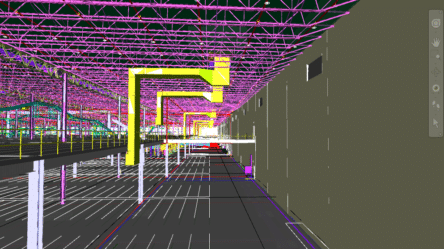
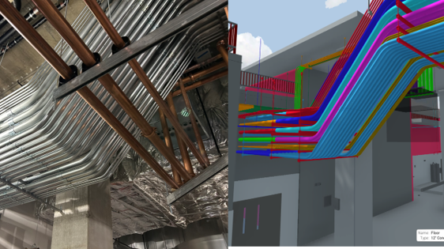
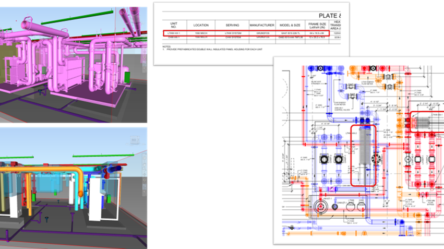
BIM coordination is the process of integrating multiple trade models (architectural, structural, mechanical, electrical, plumbing, and fire protection) into a federated 3D model to:
- Detect and resolve clashes
- Validate constructability
- Align installation sequencing across trades
This process typically happens through weekly coordination meetings, where teams review clashes and agree on resolutions.
A Practical Metric: Square Footage per Coordination Meeting
Based on real-world project data, BIM coordination progress can be estimated using square footage coordinated per meeting.
Typical Benchmarks
- Warehouses / Repetitive Buildings (Hotels)
~7,500 SF per meeting
→ Example: 75,000 SF ≈ 10 meetings
- Schools, Commercial Buildings, MOBs
~4,500 SF per meeting
- Wood Frame Structures
~3,000 SF per meeting
(More variability + tighter tolerances reduce efficiency)
- Localized Retrofits
~2,000 SF per meeting
(Higher complexity, existing conditions, unknowns)
- Condensed Industrial Projects
Must be evaluated case-by-case due to system density
Why Coordination Efficiency Varies
These numbers shift based on a few critical factors:
- System density (MEP congestion drives clash volume)
- Repetition (repeatable layouts accelerate coordination)
- Model quality at kickoff (garbage in = slow coordination)
- Team experience and decision speed
- Level of detail (LOD) requirements
This is why two buildings with identical square footage can require drastically different coordination durations.
How to Use This Rule of Thumb
Instead of guessing coordination duration, teams can:
- Identify building type
- Apply the appropriate SF/meeting benchmark
- Divide total project square footage
- Adjust for known complexity factors
This turns coordination planning from reactive to predictable.
Conclusion
Ultimately, there’s no universal formula for BIM coordination duration, but there is a reliable way to estimate it.
Using square footage per meeting as a baseline gives project teams a practical planning tool, helping set expectations early and reduce schedule uncertainty.
For teams looking to go further on this topic, check out 9 Tips for Effective BIM Coordination Meetings.