

Does BIM justify its cost?
For MEP contractors and project owners, that’s the question that matters. Building Information Modeling (BIM) is widely discussed for its efficiency and coordination. Yet, its real value lies in how those benefits translate into measurable project outcomes.
Understanding the cost-benefit dynamic of BIM in MEP systems means looking beyond general advantages and focusing on what actually changes in the field.
What Does BIM for MEP Systems Actually Cost?
Adopting BIM for MEP systems involves upfront investment, typically in software, skilled labor, and the time required to develop coordinated models. However, these investments are intended to reduce inefficiencies later in the project lifecycle.
The question isn’t what BIM costs. It’s whether those inputs lead to downstream savings and performance improvements.
Key Benefits of BIM in MEP Coordination
1. MEP Clash Detection Before Construction Begins
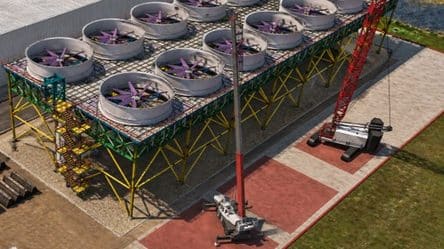
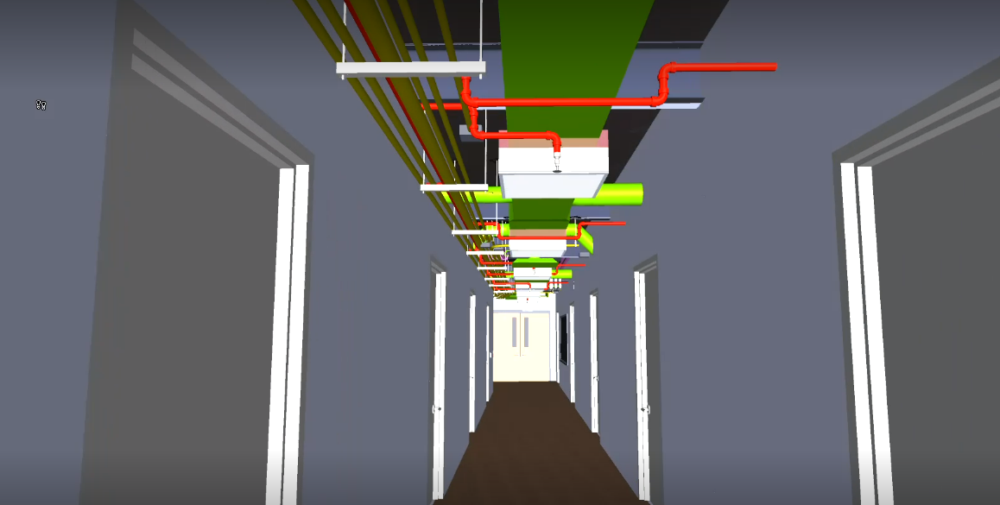
One of the most immediate benefits of BIM in MEP systems is enhanced coordination across trades. By identifying clashes between mechanical, electrical, plumbing, and fire protection systems before construction begins, teams reduce the likelihood of field conflicts.
This process directly results in improved quality, minimizing rework, one of the most persistent cost drivers in MEP installation. Instead of reacting to issues onsite, project teams resolve them in the model, where changes are faster, cheaper, and far less disruptive.
2. Faster Design and More Predictable Installation
Working within a coordinated BIM environment improves efficiency across both design and construction phases. Design teams develop more accurate, aligned systems while field teams benefit from clearer documentation and fewer ambiguities on-site.
In practice, this translates into fewer delays, less back-and-forth between trades, and a more consistent and predictable workflow from design through installation.
3. Fewer Errors, Less Rework, Lower Costs
MEP systems are complex and highly interdependent, which makes errors particularly costly when they surface during construction. BIM improves accuracy by giving teams visibility into issues. This process enables early identification and addressing errors in the design phase. Resulting in fewer field corrections, minimizing material waste, changing orders, and schedule disruptions that would otherwise compound across trades.
4. Clearer Visualization for Better MEP Decision-Making
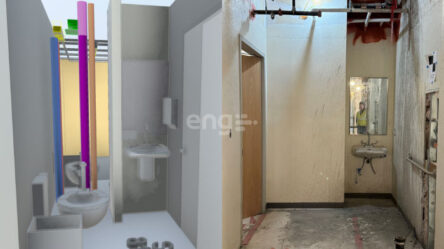
BIM provides a detailed three-dimensional representation of MEP systems, giving all stakeholders a shared understanding of how systems are laid out and interact.
This visibility supports better decision-making during design and coordination, helps teams anticipate challenges before they reach the field, and reduces uncertainty at every stage of execution.
5. Enhanced Safety
BIM allows designers to identify and address potential safety hazards before construction begins. By simulating the installation and operation of MEP systems in a virtual environment, potential risks and safety issues can be identified and mitigated effectively. This proactive approach significantly reduces the risk of accidents and injuries on the job site, ensuring a safer working environment for all workers involved.
Weighing the Cost Against the Value
The cost-benefit equation for BIM in MEP systems comes down to a straightforward tradeoff.
On one side: upfront investments in tools, processes, and expertise. On the other hand, efficiency gains through improved MEP coordination, reduced rework, and better-controlled project delivery.
When those benefits are realized, BIM shifts from being an added cost to a value-generating component of the project that pays for itself through what it prevents.
To see the real-world impact of BIM implementation, take a look at ENG’s recent case study featuring Bunkley Electric and how they significantly improved their efficiency using BIM and Robotic Total Station (RTS) technology.
Conclusion
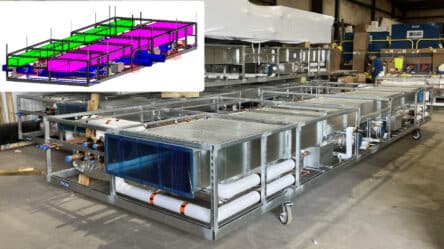
The cost-benefit case for BIM in MEP systems plays out in clash logs, change order counts, and installation schedules. When coordination happens in the model rather than in the field, the downstream savings are concrete and compounding.
Ultimately, BIM is less of a technical upgrade and more of a strategic decision that shifts project delivery from reactive to controlled.
Ready to see what a fabrication-ready BIM workflow looks like in practice? Contact us and let’s talk about your project.