

In 2026, the construction industry continues to expand rapidly, but so does its challenges, including skilled labor shortages, material price fluctuations, and cross-disciplinary coordination. For MEP (mechanical, electrical, and plumbing) contractors, even a small design conflict can snowball into costly rework and project delays. Building Information Modeling (BIM) helps bridge this gap by fostering collaboration and identifying conflicts early through a process known as MEP BIM clash detection. But how exactly does BIM-based clash detection transform MEP coordination?

What is MEP BIM clash detection?
MEP BIM clash detection is the process of identifying and resolving conflicts (clashes) between mechanical, electrical, and plumbing systems using Building Information Modeling (BIM). By detecting issues before construction begins, contractors can reduce rework, control costs, and improve project coordination.
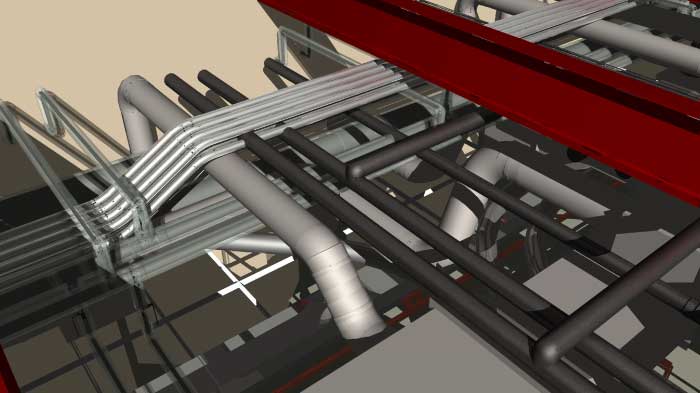
These 3D Models are combined into a federated model, allowing teams to perform clash detection in BIM before construction starts. This process typically identifies two types of issues:
- Hard clashes: Physical interferences between elements (e.g., ducts intersecting beams)
- Soft clashes: Clearance or accessibility issues affecting installation and maintenance
Through 3D coordination, engineers and contractors can analyze these conflicts early and resolve them digitally. This improves decision-making and prevents costly issues in the field.
Why MEP Contractors Need BIM Clash Detection for Coordination
Traditionally, MEP contractors faced many challenges in ensuring that their MEP systems fit seamlessly with the building’s structure and architecture. These challenges included:
- Incomplete or inaccurate drawings
- Limited visibility of system interactions
- Missed constructability issues
- Poor coordination between trades
Clash detection in BIM can help contractors by detecting potential issues early in the process, avoiding costly surprises, reducing rework, and speeding up the construction timeline.
Key Benefits of MEP BIM Clash-Detection for MEP Contractors
Let’s dive into the tangible benefits that MEP contractors can gain from BIM-based clash detection.
A. Improved Cost Predictability and Reduced Rework
One of the most significant advantages of clash detection in BIM is cost predictability. By resolving clashes and constructability issues during the design phase, contractors can avoid last-minute changes and corrections on the job site, which are often the root cause of budget overruns. For instance, if an MEP system clashes with a structural beam, BIM experts resolve the issue in the virtual model before construction even starts, saving time and money. The reduction in rework means fewer change orders, more accurate bids, and a smoother overall project flow.
B. Improved Accuracy of Quantity Take-offs
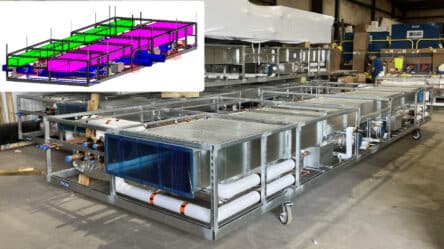
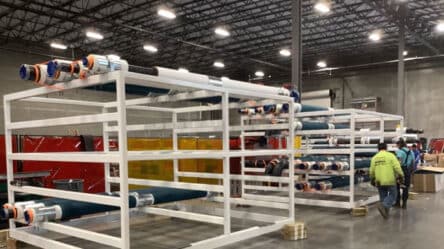
Another notable benefit of BIM clash detection is the improved accuracy of quantity take-offs and prefabrication. Accurate quantity take-offs are crucial for ensuring the right materials are ordered and costs are estimated correctly. When supported by accurate BIM models, quantity take-offs become more reliable, particularly when models are developed to 400 LOD, enabling direct use for manufacturing/accurate fabrication, and installation
C. Enhanced Quality Control Through Standardization
Clash detection in BIM supports more consistent installation approaches. This means that MEP systems are designed and implemented with greater consistency across the project. Standardization, on the other hand, helps maintain quality control by ensuring that all systems and components adhere to the same specifications, reducing discrepancies during installation.
D. Accurate Spool Drawings Based on Coordinated Models
Spool drawings are a vital part of the MEP installation process. These detailed drawings specify how various MEP components will be installed in the field, and they need to be precise to avoid mistakes during construction. BIM-based clash detection ensures that these spool drawings are accurate because they are generated from coordinated models that have already undergone clash detection.
This integration leads to better, more reliable prefabrication and installation. Accurate spool drawings, created from a fully coordinated BIM model, provide contractors with a clear, error-free roadmap, resulting in faster, more efficient installations.
E. Better Collaboration and Improved Safety
BIM fosters better collaboration among project teams. When all stakeholders have access to the same 3D model, everyone is on the same page. This unified platform ensures that any clashes or conflicts are identified and resolved early, leading to better communication and fewer misunderstandings between teams.
Additionally, resolving clashes before construction begins directly contributes to job site safety. With fewer changes and modifications made on-site, there are fewer opportunities for accidents. Having accurate, pre-approved designs also means contractors don’t need to make quick decisions under high pressure, which can sometimes lead to dangerous oversights.
The Future of MEP BIM in Construction
As BIM continues to evolve, the tools and technologies available to MEP contractors are only going to improve. With advancements like artificial intelligence (AI) and machine learning, the future of BIM-based clash detection will become even more intuitive, allowing for real-time clash resolution and smarter design optimization.
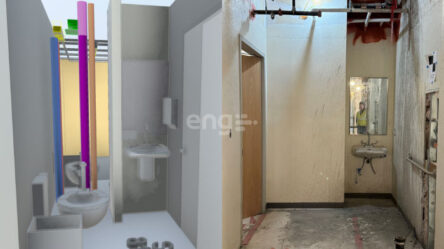
Long-term, BIM adoption will lead to smoother future renovations and facility management processes. The digital models created during the design and construction phases provide a comprehensive, detailed record of the building’s systems, making future updates and changes far easier to implement.
Conclusion
The adoption of MEP BIM clash-detection is a crucial step for MEP contractors looking to improve the quality, cost-efficiency, and safety of their projects. By embracing BIM, MEP contractors can stay ahead of the curve, deliver high-quality results, and enhance project outcomes.
If you’re ready to take the next step, consider implementing MEP BIM clash detection on your next project. Whether you’re just getting started or looking to refine your current processes, the possibilities for improving your workflows and project outcomes are endless. Let ENG experts assist you and transform how you approach MEP projects.