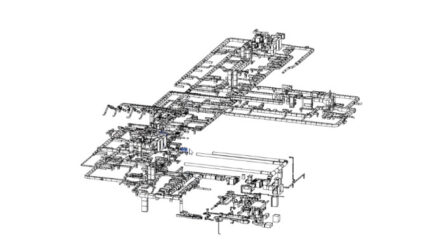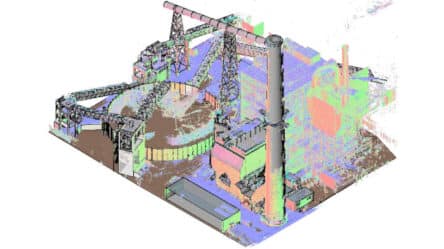


In multi-level HVAC systems with complex routing requirements, information quality matters just as much as geometry. For MEP contractors, a well-defined mechanical BIM workflow keeps modeling, coordination, and documentation continuously aligned. If that alignment breaks down, contractors are forced to fill the gaps themselves. The result? More errors, more clashes, and avoidable schedule delays
This article walks through a real multi-level mechanical school facility project, covering how the ENG team structured the BIM process to meet MEP coordination requirements, support HVAC duct fabrication, and maintain consistency through QA/QC controls.
Mechanical BIM Workflow for a Multi-Level Building
The project involved a school facility organized across three levels:
- First floor: Areas A, B, and C
- Second floor: Areas A, B, and C
- Mechanical platform and roof level
All levels required full MEP modeling, covering ductwork, piping, and plumbing systems. With multiple trades operating in tight, congested interstitial spaces, BIM coordination wasn’t optional; it was the foundation that made installation possible.
To keep everything aligned, the ENG team structured the mechanical BIM workflow into four clear, sequential phases
- Modeling of all mechanical systems
- Cross-trade coordination and conflict resolution
- Final coordination sign-off
- Preparation of installation drawings
BIM coordination only works when it’s treated as an ongoing process, not a one-time clash detection exercise. If each phase isn’t validated before moving forward, unresolved issues don’t disappear. On the contrary, they will carry through to fabrication and eventually show up on site.
Mechanical BIM Workflow for HVAC Duct Fabrication
One of the client’s core requirements was a ductwork numbering system to support shop fabrication. This requirement is common for mechanical projects and sits at the intersection of BIM workflows, HVAC BIM, and fabrication planning.
To support this, the team implemented a targeted strategy by integrating BIM-based QA/QC controls into the modeling process, ensuring a reliable and fabrication-oriented duct numbering system.
Numbering Strategy
- Each standard-length duct piece was assigned a unique identification number
- Identical elements were grouped under a shared number to reduce fabrication complexity
- All identification data was reflected directly in the installation drawings
- The overall data is complete and consistent prior to fabrication release
For MEP contractors, this type of BIM workflow for HVAC duct fabrication delivers structured, actionable information. Instead of interpreting a continuous model in the shop, fabrication teams work from clearly identified elements that correspond directly to the drawings.
QA/QC Process in BIM Modeling
As noted earlier, a structured QA/QC process in BIM modeling is what separates a usable model from one that causes downstream problems. On this project, Ludmylla Barbossa, ENG´s BIM specialist, applied internal quality controls throughout all phases of the workflow.
The controls focused on three areas:
- Verifying model consistency across trades and levels
- Ensuring alignment between modeled elements and the documentation produced from them
- Validating that the information in the model actually supported fabrication requirements
This ongoing verification approach is especially important in multi-level projects, as changes to one system can affect spatial relationships on other floors. Moreover, catching inconsistencies early, before drawings are issued, is significantly less expensive than resolving them after fabrication has started.
Practical note: QA/QC in BIM is most effective when it is built into the workflow as a recurring step, not treated as a final review before delivery.
How BIM Reduces Construction Errors in MEP
The connection between structured BIM workflows and reduced field errors is well understood in principle. In practice, the mechanism is straightforward: when the model, the coordination process, and the documentation are consistently aligned, contractors receive information they can actually trust.
On this project, the integration of QA/QC controls and the duct numbering strategy produced three specific outcomes:
- Consistent alignment between the model and installation drawings, eliminating ambiguity for field crews
- Clear identification of each duct element, reducing the need for on-site interpretation
- Fabrication support without requiring additional detailing outside the original scope
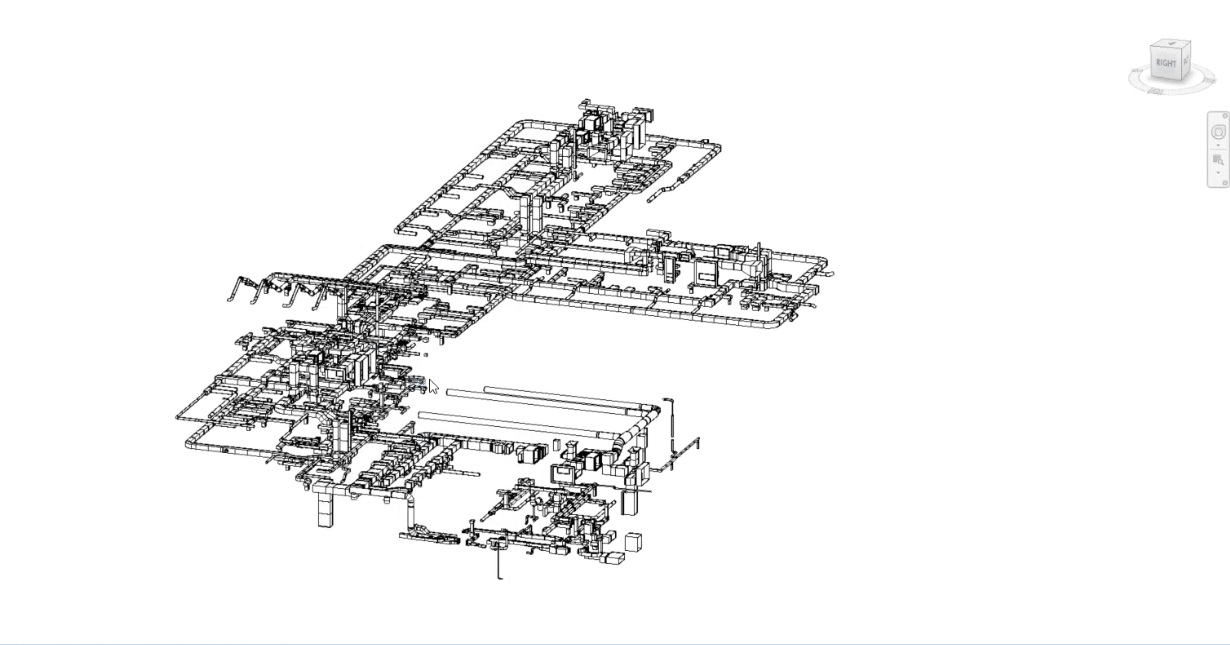
This is how BIM reduces construction errors in MEP, not only through cutting-edge technology, but through a workflow that ensures the information reaching the field is accurate, traceable, and complete. Ultimately, the 3D model is only as valuable as the process behind it.
The Value of a Structured BIM Process
For contractors and project stakeholders, the value of BIM is not primarily visual. It lies in the quality, consistency, and usability of the information the model produces.
By aligning Sheet Metal modeling within a coordinated BIM workflow, this project delivered
- Clear, traceable information for every ductwork element
- Consistent alignment between the coordination model and installation drawings
- Practical support for sheet metal fabrication
- Reduced need for field interpretation during installation
The result was a workflow that MEP contractors could rely on, and a model that continued to deliver value beyond the coordination phase.
Final Thoughts on Mechanical BIM Workflow
A well-executed mechanical BIM workflow ensures that each stage of the BIM process actively supports the next. In mechanical systems, that means making deliberate decisions about how elements are modeled, how information is structured, and how quality is verified throughout the project. When those decisions are made intentionally and consistently, the result is a model that contractors can use with confidence
For BIM managers and MEP contractors looking to improve outcomes on their next mechanical project, the approach outlined here offers a practical starting point: structure the workflow first, and the information quality will follow.