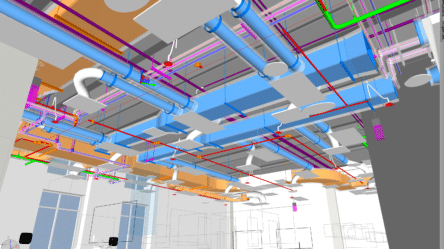


BIM requirements for contractors typically include model creation, clash detection, coordination meetings, shop drawings, spool drawings, quantity takeoffs, point layout data, fabrication deliverables, and other project-specific outputs. These requirements are usually defined in the BIM Execution Plan (BEP), contract documents, specifications, or coordination requirements. Review them before pricing any project.
One line in a bid package. That’s often all it takes in BIM requirements for contractors to be missed, and the fallout is predictable: scope gaps, inaccurate pricing, and value left on the table.
For estimators and trade contractors, the real challenge is understanding what BIM demands. In terms of deliverables, coordination effort, software requirements, and ongoing project responsibilities. Approached with the right mindset, BIM stops being a compliance checkbox and starts driving how the work gets built.
What Is BIM and Why Does it Matter for Contractors?
Ask ten people what BIM is, and most will say “a 3D model.” That answer, though, is not wrong; it is incomplete.
For construction teams, BIM is better understood as a process. One that, when combined with broader Virtual Design and Construction (VDC) workflows, connects digital information, cross-team coordination, and shared communication to resolve problems before they reach the field. The value comes from how teams use the BIM model to support coordination, planning, procurement, fabrication, and field execution.
A constructible BIM model eliminates the guesswork that generates rework. For MEP contractors, that means field crews installing MEP systems that have already been coordinated, prefabrication shops working from accurate geometry, and project teams spending less time issuing RFIs and more time executing.
Common BIM Deliverables Contractors Should Plan For
Before pricing BIM, it’s worth asking a different question: what do you actually want from it?
The list of possible outputs is substantial: clash detection reports, coordination drawings, layout and spool sheets, shop drawings, point layout data, bills of materials, quantity takeoffs, fabrication files, and prefabrication deliverables.
For MEP contractors, BIM can support spool-level detailing, fabrication planning, installation sequencing, and shop production workflows. These outputs help move work from the field into controlled shop environments where labor can be planned more efficiently.
From an estimating perspective, each deliverable represents labor, coordination effort, and production requirements that should be accounted for before pricing the work. The more BIM deliverables required, the more time and resources are typically needed to support the scope.

Where to Find BIM Requirements in Construction Documents
BIM coordination requirements are not always presented clearly. In some projects, there may be a dedicated document that outlines the BIM scope, responsibilities, software requirements, BIM deliverables, and coordination process. In other cases, the requirement may be buried in the general section or hidden within trade-specific sections.
For that reason, contractors and trade contractors need to know where to look. Common places include general requirements, contracting requirements, coordination drawing sections, submittal sections, and trade-specific specifications.
When a project includes a separate BIM requirements document, the scope is usually easier to identify and communicate internally. When it does not, a careful review of the construction documents becomes even more important.
How LOD Requirements Impact BIM Scope and Pricing
One of the most important BIM requirements for contractors to look for is the Level of Detail (LOD). The LOD defines how much information and detail must be included in the model and directly impacts the effort required to produce BIM deliverables.
In most construction projects, contractors will encounter three common levels:
- LOD 300 – General system layout and design intent.
- LOD 350 – Includes system interfaces, connections, and coordination information. This is often considered the standard level for construction coordination.
- LOD 400 – Fabrication-level modeling that supports shop drawings, spool drawings, prefabrication, and installation planning.
The required LOD can significantly influence the modeling and coordination scope, labor hours, and deliverables. An LOD 400 model requires substantially more detail than an LOD 300 model because it must support how systems will be fabricated and installed.
Common BIM Estimating Mistakes to Avoid
The most common mistake? Pricing BIM as model-only scope. The actual work typically involves coordination drawings, update cycles, clash reports, and other deliverables that carry real labor hours.
A second issue that slips through is skipping a review of available design models. Usable models can significantly cut modeling time, but if nonexistent, the scope expands quickly. That distinction alone can change the budget.
Hidden scope is the third trap. Extra coordination meetings, non-standard update requirements, and responsibilities that fall outside a typical BIM workflow are easy to miss in a long spec. Catch them before pricing, not after.
How Contractors Can Get More Value from BIM
Contractors who push past the required deliverables can use the same BIM model to drive planning, reduce field risk, and tighten execution. For trade contractors, that advantage is especially visible in prefabrication, where shop-ready outputs, accurate quantity data, and resolved clashes translate directly into fewer RFIs, less rework, and smoother installs.
In many cases, the greatest return on BIM investment comes when the model supports prefabrication. Fabrication-ready information can help standardize assemblies, improve shop productivity, and reduce field labor hours.
The 3D model is most useful when it’s tied to how the work is actually done. Think about what the field needs, what the shop needs, and what would reduce coordination friction. That’s the lens to bring into BIM scope planning.
Conclusion
Understanding BIM requirements starts with knowing what deliverables are expected, where those requirements are documented, and how factors such as LOD and coordination responsibilities affect the scope of work. Reviewing these requirements early helps contractors identify potential gaps, align resources appropriately, and avoid surprises during execution.
When BIM requirements are clearly understood, BIM becomes a key process for improving coordination, supporting fabrication and prefabrication workflows, reducing field conflicts, and creating a smoother path from planning to installation.
Are you looking to develop accurate BIM estimates for your MEP projects?
Get more reliable BIM modeling and coordination estimates for your MEP projects with ENG’s BIM Estimate Tool.