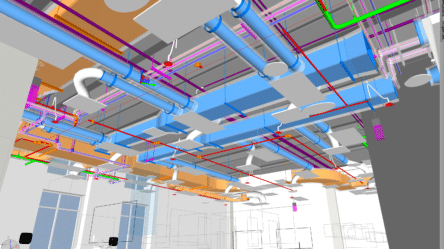


4D BIM scheduling links a construction schedule to a 3D BIM model, creating a time-based simulation that shows what will be built, when it will be built, and in what sequence. General contractors use it to validate logistics, improve communication, reduce risk, and identify scheduling conflicts before construction begins.
4D BIM sequencing for general contractors enables them to plan preconstruction more clearly and coordinate it more effectively. By connecting the schedule, the model, and the logistics, teams can visualize how the work will unfold. This process lets them validate the sequence, identify risks, and communicate the plan more accurately. The result is less uncertainty, less rework, fewer delays, and lower cost from improvising in the field.
This article explores how 4D BIM sequencing for general contractors links the construction schedule directly to the 3D BIM model. It also dives into how GCs apply it across three distinct moments in a project: winning the work during bidding, planning the work during preconstruction, and de-risking complex scopes during construction.
Why General Contractors Use BIM
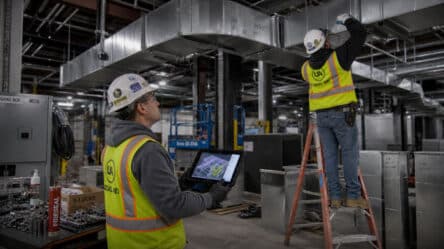
General contractors use BIM. Driven by an expanding construction market that’s creating more complex, high-value projects where BIM coordination has become critical to project success. Those who don’t adopt it risk falling behind competitively on bids and delivery.
Top GCs are actively shifting from reactive coordination to proactive, pre-construction-led BIM delivery, and many are seeking outside partners to help make that shift. The underlying tension driving this shift is real. GCs are accountable for outcomes at every level: model accuracy, coordination, safety, and delivery. Yet, they often lack internal resources or bench depth to fully leverage BIM without support.
What Is 4D BIM Scheduling?
4D BIM scheduling links a 3D BIM model to a construction schedule, adding time as a fourth dimension to produce an animated sequence that shows what gets built, when, and in what order.
Rather than just an animation as typically conceived, 4D BIM Scheduling is a preconstruction communication and decision-making tool. The required inputs depend on the objective and the project stage. For instance, a pursuit animation can be built from milestones and design plans, or even conceptual ones. While a detailed sequence or progress-tracking animation usually requires a schedule and a more developed model.
Deliverable types include owner presentation animations, logistics plan animations, site sequencing, phasing plans, and 5D cost overlays.
Ultimately, 4D BIM sequencing for general contractors connects the construction schedule to a three-dimensional representation of the project relevant to the objective. Depending on the project stage, this can range from conceptual geometry to a coordinated model. It also adds the time dimension, turning a static deliverable into a communication tool that owners, subs, and stakeholders can follow without needing to read plans or a Gantt chart.
4D BIM During Preconstruction
Win the Work
In the bidding and pursuit phase, 4D acts as evidence: visual proof that a GC understands a project’s risks before being asked to solve them. Built from basic site logistics information rather than a complete model, most 4D work today happens at this stage, using simple 2D plans.
The logic behind it is direct: “the team that wins is the one that communicates the project best and communicates it best because it understands it best.” This turns 4D into a proposal strategy that differentiates a GC, even as competitors continue to present static plans and Gantt charts.
Plan the Work
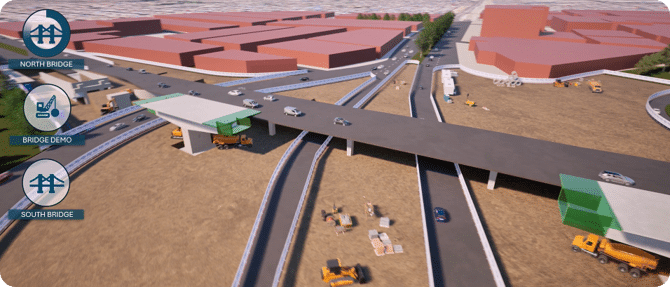
Once awarded, the objective shifts from persuasion to validation. 4D sequencing for general contractors tests phasing, access, laydown, crane strategy, and logistics against real site constraints before any trade mobilizes. Logistics-heavy projects, like a live airport built around active operations, depend on this step to avoid conflicts once work begins.
BIM During Construction
Work the plan
Once construction begins, 4D sequencing shifts from validating the overall plan to protecting its execution.
GCs can apply it selectively to high-risk activities such as:
- Crane picks
- Shutdowns
- Work within active sites
- Utility installation or relocation
- Demolition sequences
How BIM Helps General Contractors Win Bids
Owner presentation animations show the full build-out over time, letting owners see how a project will come together without having to read a plan set or a Gantt chart. Logistics plan animations do the same for site strategy, showing crane movements, staging, and access routes across the timeline. Both formats are built to be understood in a single sitting, by an audience that isn’t necessarily reading construction documents for a living.
Mid-sized GCs have used 4D pursuit animations to differentiate themselves in competitive interviews, including one that recently used 4D as part of a successful hospital pursuit. The animation also does quieter work before the interview even starts.
Conclusion: Getting Started With 4D BIM Sequencing
Scoping a 4D engagement doesn’t require a finished BIM model. At minimum, it takes architectural and structural plans, a milestone or CPM schedule (or client-provided phases), and clarity on the deliverable type: an owner presentation, a logistics animation, or a phasing plan. If a model doesn’t exist yet, base modeling can be produced first, followed by the 4D animation as a natural next step.
Turnaround is typically two to four weeks from receipt of a clean model and schedule, with rush delivery available, subject to capacity. If a pursuit or a project phase is coming up where this kind of planning could apply, it’s worth a conversation before the schedule is set.