

MEP prefabrication improves construction efficiency by shifting assembly from the field to a controlled shop environment. Key benefits include reduced material waste, faster installation, improved labor productivity, and more predictable project costs. These gains depend on accurate BIM models and well-coordinated fabrication workflows.
MEP contractors face constant pressure to install faster, control jobsite inefficiencies, and avoid material waste that cuts into already tight margins. The clearest MEP prefabrication benefits come from shifting production from the field to a controlled shop environment. When crews handle too much work onsite, they experience reduced control, slower progress, and a higher risk of rework and overruns.
Prefabrication in MEP Systems changes how VDC/BIM teams plan and execute installation workflows. As teams prefabricate more of what they model, they move production upstream, ahead of installation.
What Are the Main Benefits of MEP Prefabrication?
MEP prefabrication improves construction efficiency by reducing material waste, lowering field labor costs, accelerating installation, and improving cost predictability.
When teams use the 3D model to define MEP runs, assemblies, and pre-cut materials (hangers, copper/plastic pipes, etc.), contractors can move more production into the workshop rather than building those elements entirely in the field.
In pipe workflows, for example, teams can fabricate pipe spools in the shop, load a batch onto a truck, send it to the project, and install it directly. This significantly reduces the number of field welds required. It also simplifies site logistics because crews do not need cutting and welding stations for large-bore piping or stockpile materials onsite before installation begins. As a result, teams can move through installation with less friction and a streamlined workflow.
| Benefit | How Prefabrication Helps |
|---|---|
| Waste reduction | More accurate quantities, cut lists, and controlled material handling |
| Cost control | Less field adjustment, fewer labor overruns, more predictable production |
| Schedule compression | Faster installation through pre-built racks, spools, and assemblies |
| Quality improvement | Shop conditions reduce variability and rework |
What Prefabrication Level Means in MEP Modeling
In MEP modeling, prefabrication level describes how much of the content represented in the 3D model the team plans to prefabricate. The prefabrication level directly impacts cost and schedule by shifting production from the shop to the field.
A higher level of prefabrication allows the team to build more MEP systems in the shop rather than assembling them in the field.
How Level of Detail (LOD) Connects to Prefabrication
As prefabrication level increases, VDC/BIM teams need more precise 3D model information to define assemblies and installation content. In fabrication-driven BIM workflows, that level of precision often aligns with LOD 400.
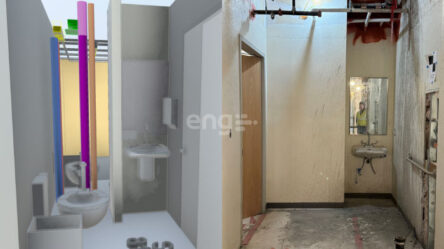
In practice, that means teams must model the MEP Systems exactly as they will be installed. For example, the VDC/BIM team must model accurate fittings, correct valve and equipment geometry, and required accessories in their exact locations. If the model misses a component or shows equipment incorrectly, the prefabricated assembly may not fit in the field.
MEP Prefabrication Workflow: From BIM Model to Shop
Prefabrication in MEP Systems doesn’t begin in the shop; it begins in the BIM model. With the MEP scope modeled to LOD 400 precision, the VDC/BIM team can define fabrication packages and begin moving production upstream. That transition from model to shop moves through four connected stages:
- Define fabrication packages: The VDC/BIM team groups MEP runs into logical assemblies based on installation sequence, rack layout, and shop capacity. Patterns in the model, mirrored rooms, repeating layouts, and standardized rack configurations become opportunities to prefabricate at scale.
- Extract shop drawings and spool drawings: When teams use the 3D model to define MEP runs, assemblies, and pre-cut materials, the VDC team translates fabrication packages into spool drawings and cut lists that the shop can build directly. BIM coordination and clash detection must be fully resolved before this stage; an incorrect valve position or misaligned fitting in the model becomes a misfit assembly in the field.
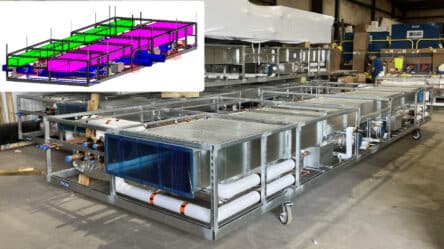
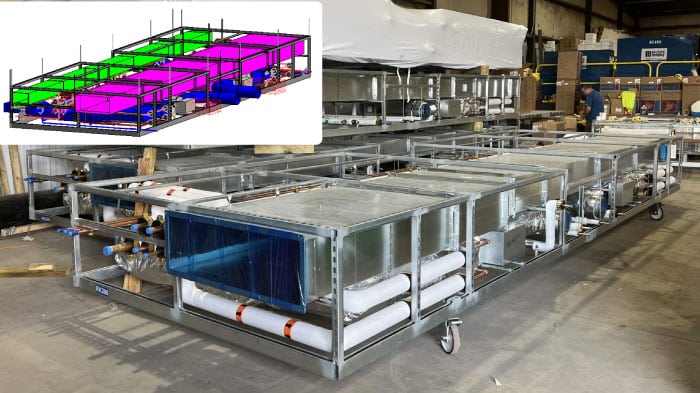
- Fabricate in the shop: Assemblies move through a station-based workflow, where each workstation focuses on a defined portion of the rack or spool. This setup improves efficiency, reduces material shortages, and keeps production moving without the interruptions that slow field crews.
- Deliver and install: The shop stages, loads, and delivers completed assemblies to the project site. Field crews receive pre-built units and install them directly, reducing the need for on-site cutting, fitting, and adjustment
MEP Prefabrication Case Study: VDC-to-Shop Coordination
The connection between VDC and the shop must stay active throughout the whole project. At Penn State Lancaster Medical Center, a 129-bed Greenfield hospital, ENG’s VDC team held weekly alignment meetings with McClure Company’s fabrication shop throughout production. Workstations inside the shop mirrored sections of the BIM model, so every crew member worked from the same coordinated information.
The result: the project stayed on schedule and under budget despite pandemic disruptions, with 30% labor savings and 20% faster installation compared to conventional field assembly.
For MEP contractors evaluating how much scope to prefabricate, that direct line between VDC and the shop determines whether the workflow delivers on its promise.
Key Takeaways for MEP Contractors
MEP prefabrication benefits compound across every phase of a project. Reduced material waste, more predictable shop production, and faster field installation don’t operate independently; each one follows from the same decision. Moving more of the MEP scope out of the field and into a controlled production environment before installation begins.
If your team is evaluating how BIM-driven prefabrication could reduce costs and compress the schedule on your next project, ENG’s VDC team works directly with MEP contractors to build fabrication-ready models from coordination through installation.