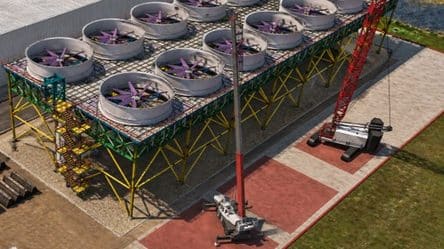


MEP BIM for mechanical contractors is the use of 3D, data-rich models to design, coordinate, fabricate, and install mechanical systems such as HVAC and piping. These models support constructability, prefabrication, and field execution by providing accurate geometry and installation-ready information.
In mechanical construction, BIM creates value when it helps teams do more than coordinate systems on screen. For mechanical contractors and project owners, the real advantage comes when models support constructability, prefabrication, and field execution with clarity and less rework.
This article looks at how MEP BIM for mechanical contractors works, the use cases where it delivers practical value, and the benefits it offers.
What Is MEP BIM in Mechanical Projects?
MEP BIM Modeling refers to the use of Building Information Modeling to design, coordinate, and execute mechanical systems such as HVAC, piping, and hydronic distribution.
Unlike traditional 2D drawings, BIM models combine: 3D Geometry, as accurate as needed, including physical layout and Data, including sizes, materials, connections, and specifications.
This process allows teams to validate system routing, clearances, equipment connections, and installation constraints before construction begins. When developed to higher Levels of Detail (LOD 350–400), BIM can become the single source of truth for fabrication, sequencing, and field execution.
How MEP BIM Workflows Support Mechanical Contractors
MEP BIM for mechanical contractors works by turning the model into a delivery tool rather than just a coordination process. It integrates design review, clash resolution, constructability, fabrication, and installation into a single workflow.
Teams begin by aligning the model with design documents, P&IDs, equipment submittals, and contract requirements. At this stage, it is important to recognize that a design model is not the same as a construction model. The design documents define the design criteria, but they do not necessarily yield a model ready for construction or installation.
From there, the model is coordinated across trades to resolve clashes before they reach the field. Yet, the process should not stop at clash detection. Mechanical BIM becomes more valuable when coordinators and field teams work together to assess constructability early, including routing, access, hanger locations, and prefabrication opportunities. Ultimately, the goal is to create field-ready 3D models that can actually be installed.
Real Use Cases of MEP BIM for Mechanical Contractors
Across project types, MEP BIM delivers the most value when models directly support fabrication and installation. The following examples show how ENG applied BIM to improve coordination, fabrication readiness, and field execution in industrial and healthcare facilities.
LOD 400 Mechanical BIM for a Laboratory Support Facility
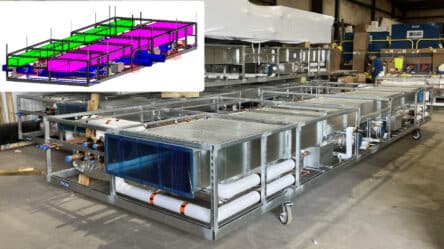
At a 160,000-square-foot laboratory support facility, the ENG team developed a LOD 400 mechanical BIM model to support direct fabrication of HVAC and process piping systems. Rather than starting with a clean BIM model, the BIM specialists worked with the client’s P&IDs, equipment submittals, and coordination drawings.
Due to the project’s requirement of restructuring an active model, constant communication with the client and perfect coordination were a must. As a result, the project team developed fabrication-oriented outputs that supported shop prefabrication and improved field readiness.
What made the difference:
- Continuous coordination with stakeholders, including people from the field
- Modeling aligned to fabrication requirements, not just layout
- Direct integration with shop workflows
What the workflow supported:
- Spool-ready fabrication information
- Less manual reinterpretation before fabrication
- Clearer guidance for installation teams
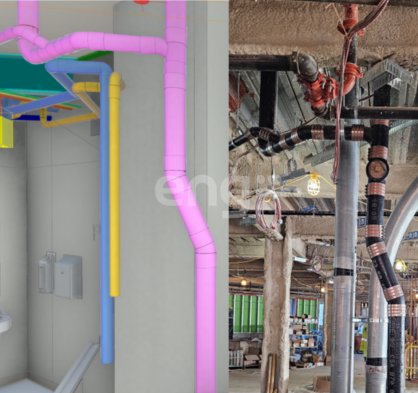
Plumbing BIM coordination at Boston’s Shattuck Hospital
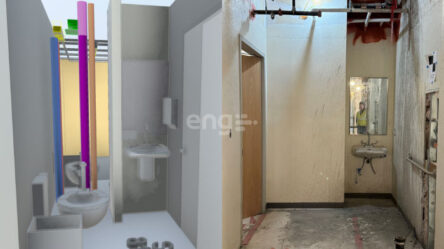
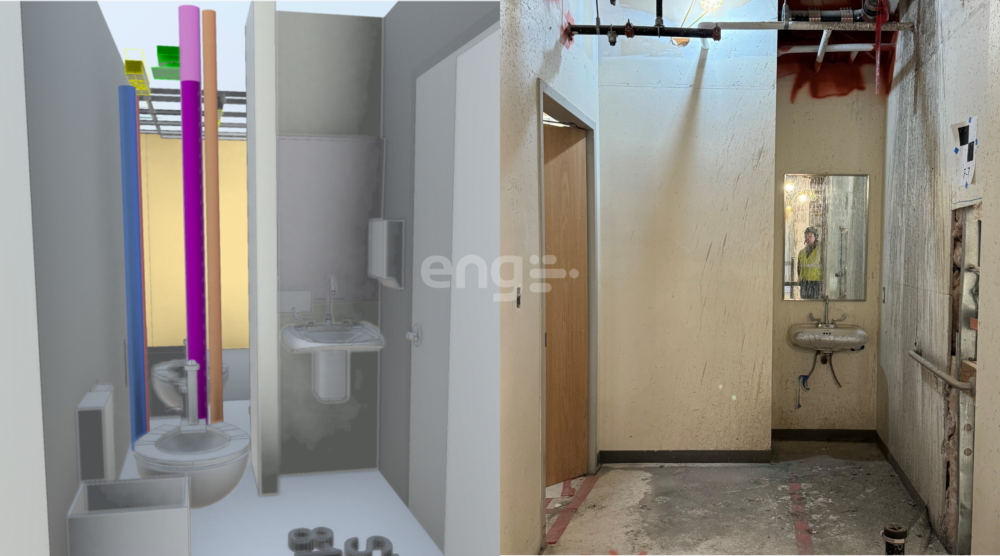
In the case of Boston’s 260-bed Shattuck Hospital, ENG led plumbing BIM coordination across three renovation challenges. The team had limited access to secure hospital areas; therefore, they required a prefabrication-first strategy. As a result, the BIM workflow helped the team plan plumbing work in constrained hospital conditions, with greater confidence in coordination, penetrations, and installation sequencing
Results:
- Better coordination around existing penetrations
- More reliable planning for field installation
- Greater confidence when sequencing work in secure areas
BIM Modeling and Coordination for Mechanical Piping
Another healthcare project was Radcliff Healthcare Facility. The ENG project team provided BIM Modeling and Coordination services for Domestic Water, Medical Gases, and Mechanical Piping to align multiple scopes under tight constraints.
BIM strategy Approach:
- Early alignment between modeling and installation teams
- A constructability-focused approach, not just coordination
- Better visibility into routing, system interfaces, and installation requirements
Project impact:
- Improved coordination across mechanical scopes
- Greater field readiness before installation
- A more reliable path from modeling to execution
What These BIM Use Cases Reveal About Project Delivery
Mechanical BIM delivers the strongest results when project teams build 3D models to support how the work will be fabricated, sequenced, and installed. That is the difference between using BIM as a design checkpoint and using it as a project delivery strategy.
Benefits of MEP BIM for Mechanical Contractors
For mechanical contractors and project owners, the value of MEP BIM is most visible in four areas: rework reduction, prefabrication efficiency, schedule reliability, and installation quality. These outcomes are drawn from real project case studies and field-driven BIM workflows, where models are developed to support fabrication and installation.
Reduced rework
Clash detection and early trade coordination help teams resolve conflicts before they reach the field. That allows contractors to reduce labor costs through fewer workers on-site.
Fabrication efficiency
Fabrication-ready mechanical BIM models enable more work to be shifted from the job site to the shop. In a controlled environment, teams can achieve a 20% reduction in material costs through optimized, standardized pipe routing.
Stronger schedule reliability
Projects using BIM-integrated fabrication workflows for MEP trades can improve schedule reliability from ~65% to ~85%, while reducing schedule variability by up to 30%.
Higher installation quality
Field teams working from accurate, model-based information spend less time interpreting drawings or improvising around conflicts. The result is a cleaner installation, fewer errors, and a more controlled path from coordination to field execution.
For owners, the benefits extend beyond construction. Mechanical BIM creates a more reliable link between design intent, installed conditions, and final as-built information. That supports commissioning, facility management, and long-term operational visibility.
Conclusion: BIM Only Works When It Supports Construction
MEP BIM for mechanical contractors only creates real value when the model supports how mechanical systems will be fabricated, sequenced, and installed. When BIM is developed with construction in mind, teams gain fewer field conflicts, stronger prefabrication workflows, and a more reliable path from coordination to execution.