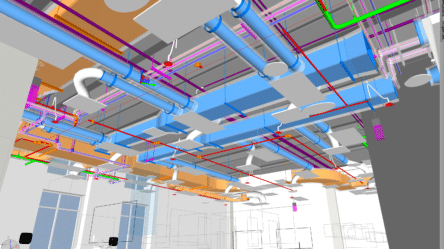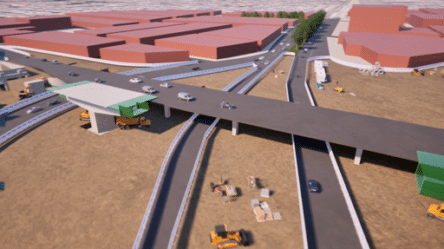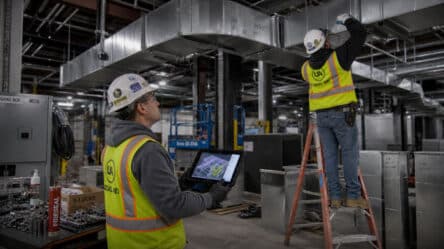


When a project demands 90,000+ linear feet of grooved pipe installed across five complex buildings in nine months, the margin for error is effectively zero. At this scale, BIM prefabrication stops being a nice-to-have and becomes the execution strategy.
Most mechanical contractors still use BIM to detect clashes and produce drawings. Yet, on complex, fast-track projects, that approach breaks down. BIM must extend into fabrication and field installation, or it creates friction instead of efficiency.
This case study shows how ENG and Atlantic Constructors (ACI) structured a fully integrated VDC and prefabrication workflow. The results: 40% fewer field labor hours, a 20% reduction in material costs, and a zero-incident safety record across both shop and field operations.
BIM Prefabrication at Scale: Project Complexity Breakdown
ACI supported the project with two fabrication shops, an in-house transportation group, and a facility located five miles from the jobsite. Yet, fabrication capacity alone does not produce install-ready systems.
To bridge that gap, ENG embedded a BIM specialist at ACI’s Richmond headquarters for six months. This created a single, continuous workflow between VDC coordination, pipe prefabrication, and field execution
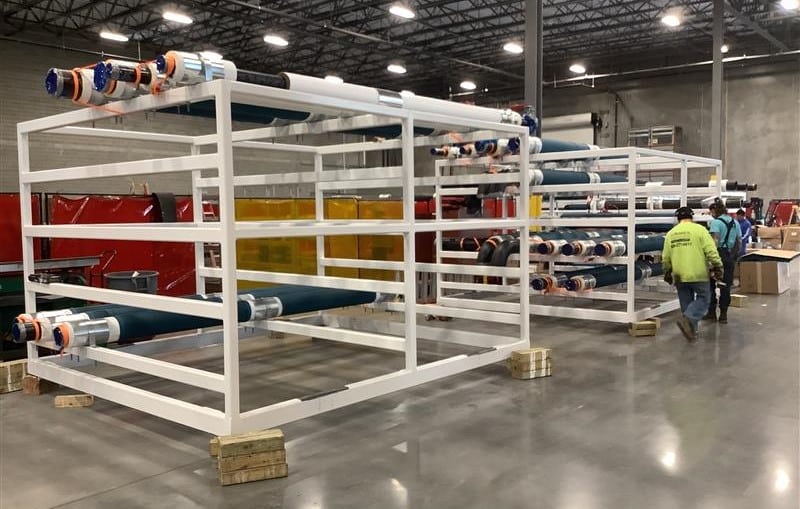
The mechanical scope on this project included:
- 90,000–95,000 linear feet of grooved pipe across five buildings
- Over 2,000 spool sheets generated to support fabrication and installation
- Pipe sizes ranging from 4″ to 24″, each requiring different handling and coordination strategies
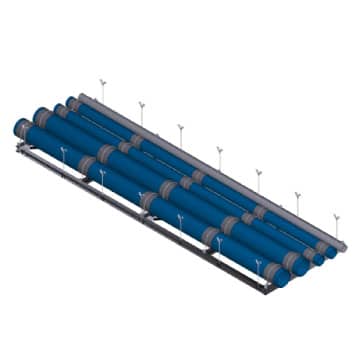
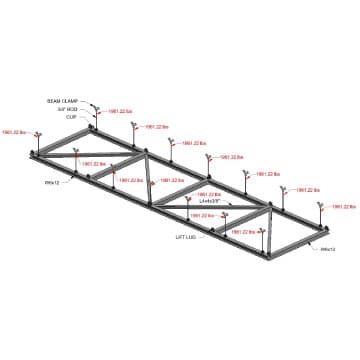
- Approximately 100 multi-service steel racks designed to organize and support the piping systems
- A nine-month installation window with no room for rework
How to Quantify BIM Prefabrication Savings in Mechanical Construction
To quantify savings from BIM prefabrication, MEP Contractors need to track how they are redistributing work, simplifying systems, and accelerating field installation.
On this project, ROI came from three specific shifts:
- Workface redistribution: Moving labor from the field into controlled shop environments
- System simplification: Reducing connections, fittings, and routing complexity
- Installation acceleration: Delivering install-ready assemblies instead of loose components
Ultimately, the teams didn’t treat BIM as a deliverable. It was used early to drive fabrication decisions, spool generation, and installation sequencing.
Results: What BIM Prefabrication Delivered
- 40% reduction in field labor — The team moved fabrication off-site, where crews worked in controlled conditions with higher output rates. This reduced the number of field installers required and eliminated productivity losses from congestion and rework.
- 20% reduction in material costs — Routing optimization and connection reduction translated directly into less pipe, fewer fittings, and lower procurement spend.
- ~10,000 linear feet of pipe installed per month — As assemblies arrived install-ready, the team maintained consistent productivity across the entire nine-month schedule
- Zero safety incidents across shop and field — Reduced field congestion, fewer crane lifts, and less time working at elevation produced a measurably safer project for every trade on site.
What BIM Prefabrication Proves at Scale
These results did not come from luck or favorable conditions. They came from deliberate decisions built on early BIM integration, prefabrication strategy, and a workflow designed around the realities of the field.
When VDC teams are embedded in the project from the start, fabrication becomes predictable. When fabrication is predictable, the field becomes more efficient. As a result, the schedule, cost, and safety all move in the right direction at once.
See the Full BIM Prefabrication Workflow Behind These Results
This BIM prefabrication case study only scratches the surface. However, behind every metric is a set of early decisions made collaboratively, with full visibility across design, fabrication, and field. To understand exactly how the ENG and ACI teams structured their BIM execution plan, managed shop-to-field handoffs, and built a repeatable prefab system across 100 steel racks, watch the full webinar.